


The global revenue cycle management market is expected to expand significantly, growing from $148.84 billion in 2024 to $361.86 billion by 2032. This underscores its importance in modern healthcare operations.
To stay competitive in this rapidly evolving landscape, businesses must ensure their revenue cycle processes are efficient and up-to-date. Proper management ensures timely payment, reduces claim denials, and enhances overall cash flow.
In this article, we’ll explore eight key ways to improve your revenue cycle management.
What is Revenue Cycle Management?
Revenue cycle management (RCM) is a critical aspect of financial operations in the healthcare industry. It encompasses the entire process of managing the financial interactions between patients, healthcare providers, and payers throughout the patient’s journey.
The primary goal of RCM is to optimize the revenue generated from patient care while ensuring efficient and accurate payment collection.
The key components of RCM include:
- Patient registration
- Insurance verification
- Charge capture
- Coding and billing
- Claims submission
- Payment posting
- Denial management
- Patient collections
Each of these components plays a critical role in the revenue cycle process.
Any inefficiencies in these areas can disrupt operations and significantly affect the financial health of a healthcare organization.
How Improving RCM Processes Can Help Your Business
Improving RCM processes can significantly benefit your business by reducing claim denials and enhancing revenue collection.
Claim denials are a major challenge for healthcare providers. as they lead to revenue leakage and increased administrative costs.
When a claim is denied, providers often face delays in payment or may not get paid at all.
However, according to Change Healthcare, 86% of denials are potentially avoidable.
By improving RCM processes, particularly in areas like patient registration, coding accuracy, and prior authorization, healthcare organizations can reduce the volume of denied claims.
Additionally, timely and accurate billing is essential for maximizing collections. Manual errors or delays in sending out bills can result in lost revenue or longer accounts receivable (A/R) days.
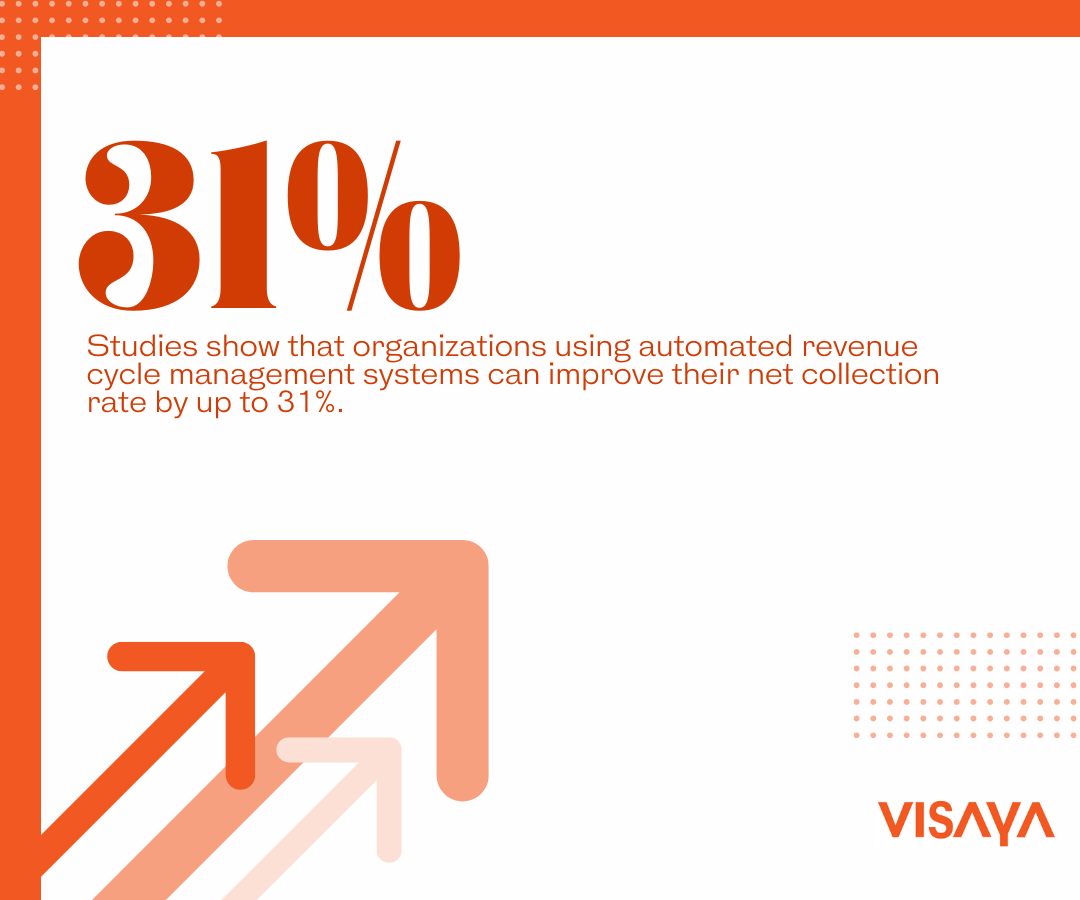
Adopting automated billing systems can streamline this process, ensuring bills are sent promptly and contain correct information. Studies show that organizations using automated revenue cycle management systems can improve their net collection rate by up to 31%.
Strategies for Improving Your Revenue Cycle Management
Improving RCM is crucial for maintaining the financial health of healthcare organizations. Here are eight best practices in RCM:
- Enhance Appointment Scheduling
When appointment scheduling is poorly managed, it can discourage patients from staying engaged with their care and increase the likelihood of no-shows.
No-shows can disrupt patients’ care, leading to longer wait times for follow-ups and increased reliance on costly emergency services.
For healthcare providers, the financial impact can lead to significant losses. In fact, a study in a vascular laboratory found that a 12% no-show rate resulted in an annual revenue loss of approximately $89,000.
To address this, it is ideal to implement automated scheduling tools that send timely reminders. These systems help reduce no-shows and make rescheduling easy for patients.
Additionally, offering 24/7 online appointment booking adds convenience and improves accessibility.
By keeping your schedule full and efficient, you create a more predictable revenue stream.
- Automate Patient Eligibility Verification
Manual insurance verification can feel like a guessing game. Your team spends valuable time double-checking policy details, only to find out later that an input error caused a claim denial.
It’s frustrating, isn’t it? Not to mention the delays in reimbursement and the extra work needed to fix the mistakes.
This is where automation makes a real difference. Real-time tools check insurance details instantly, helping your team process verifications faster and more efficiently. They also spot errors early, which means fewer claim denials and smoother operations for everyone involved.
Automated systems also capture any changes in insurance eligibility instantly. This guarantees that your team is always working with accurate and up-to-date information.
- Streamline Claims Processing
Aside from automating patient verification, transitioning to electronic claims submission is another effective way to speed up your claims process.
Using electronic systems reduces errors, ensures claims meet coding and billing standards, and prevents delays caused by manual errors or incomplete submissions.
To streamline claims processing, you can:
- Automate submission with clearinghouse software to act as an intermediary, ensuring claims are clean and compliant before reaching payers.
- Integrate electronic health records (EHR) with claims systems to provide accurate, real-time patient data for smoother processing.
- Automate front-end tasks like coding and billing to align with payer standards and reduce errors.
- Use claims management software to catch potential issues before submission.
- Leverage real-time tracking tools to monitor claims and address bottlenecks quickly.
Combining these steps creates a seamless claims process, improves efficiency, and ensures faster reimbursements.
- Manage Claim Denials Effectively
Claim denials are a common issue for healthcare providers.
However, they don’t have to derail your revenue cycle if addressed strategically. A strong denial management process is key.
Start by setting up clear procedures to identify and resolve denials as they arise.
For example, categorize denials by common causes like eligibility errors or missing documentation, and assign specific staff members to handle each type.
Negotiating with insurers is also critical. Don’t accept denials at face value—review the details, gather supporting documentation, and communicate with payers to appeal or renegotiate claims.
These efforts can often lead to partial or full reimbursement, recovering revenue that might otherwise be lost.
- Enhance Patient Billing and Collections
Patient billing should be clear and easy to understand. When patients know exactly what they owe and why, payment rates improve. Providing transparent billing statements is an essential first step.
Offering multiple payment options, such as online platforms, credit card payments, or installment plans, further simplifies the process.
Flexible payment methods accommodate patient preferences, making it easier for them to settle their bills promptly.
These steps don’t just speed up collections—they also build trust and improve the patient experience.
- Invest in Staff Training and Education
Your team is the backbone of your revenue cycle management efforts.
Providing ongoing training ensures they stay updated on the latest practices, coding standards, and regulatory changes. This reduces errors and boosts productivity.
Encouraging a culture of continuous improvement can also make a big impact.
When staff feel empowered to identify and suggest process enhancements, your RCM strategies remain adaptable and effective.
- Monitor Key Performance Indicators (KPIs)
Tracking the right metrics is crucial for optimizing revenue cycle management.
Metrics like days in accounts receivable (A/R) provide a clear picture of your organization’s financial health.
Regularly assessing these KPIs helps you identify bottlenecks and measure the success of your strategies.
Data analytics takes this a step further. By leveraging analytics tools, you can uncover trends, make informed decisions, and fine-tune your processes to enhance financial performance.
- Consider Outsourcing RCM Functions
Outsourcing tasks like billing, coding, or denial management allows your team to dedicate more time to patient care, while RCM professionals from a global service provider handle the complexities of these processes.
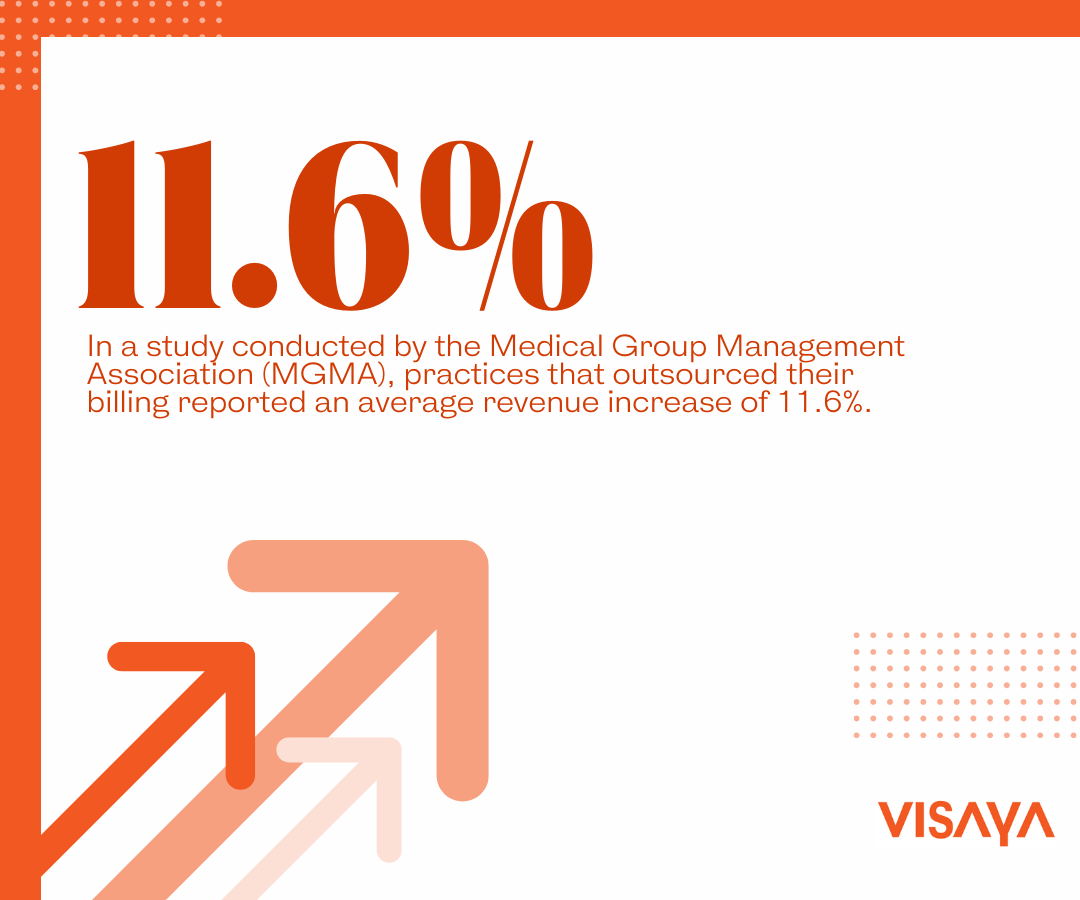
Outsourcing is also a good strategy for maximizing revenue. In a study conducted by the Medical Group Management Association (MGMA), practices that outsourced their billing reported an average revenue increase of 11.6%.
This can be attributed to the expertise and efficiency that professional RCM providers bring to the table. They use advanced tools to reduce errors, ensure claims are submitted correctly, and resolve denials promptly.
Read More: Why is Medical Coding Critical in Health Care?
What is the Role of Technology and Outsourcing in RCM?
Technology and outsourcing play significant roles in RCM. Technology, such as electronic health records and RCM software, enables automation and efficiency in various RCM processes, reducing manual errors and improving overall performance.
By leveraging technology and considering outsourcing options, healthcare organizations can enhance their RCM capabilities and achieve better financial outcomes.
Revenue Cycle Improvement FAQs
What is the most important part of the revenue cycle?
The most important factor in revenue cycle management is ensuring accuracy and efficiency in billing and coding processes. By investing in staff training, conducting regular audits, and implementing technology solutions, healthcare organizations can minimize errors and maximize revenue.
What affects effective revenue cycle management the most?
Several factors can affect efficiency in revenue cycle management. Outdated technology can lead to errors and inefficiencies, while staff training is essential for ensuring that billing and coding processes are accurate and up to date. Additionally, patient engagement and transparent billing practices are crucial for prompt and accurate payments, impacting the overall efficiency of the revenue cycle.
What is the biggest obstacle to good revenue cycle management?
The biggest obstacle to good revenue cycle management is often the complexity of healthcare billing and coding processes. These processes can be intricate and prone to errors, leading to delayed or inaccurate payments.
Improve Your Revenue Cycle Management with Visaya KPO
Enhancing Revenue Cycle Management (RCM) through improved processes and technology is key to boosting financial outcomes in healthcare.
For organizations seeking to optimize their RCM without increasing administrative burdens, partnering with Visaya KPO is a smart choice. Our revenue cycle services offer tailored solutions that streamline billing, claims, and denial management, helping to recover lost revenue.
Contact us today and take your RCM to the next level!